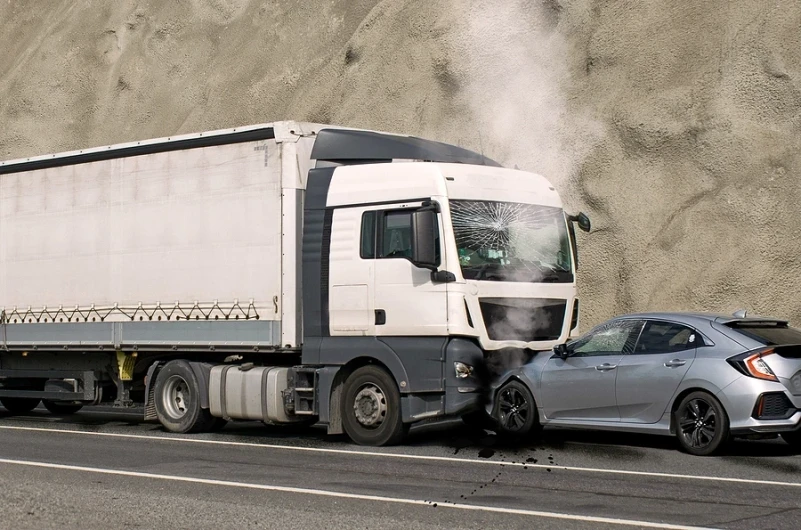
Truck Accident Law Firm Nevada represents victims and families throughout the Las Vegas Valley who have been injured in collisions with commercial trucks, semi-trucks, and tractor-trailers. Las Vegas is one of the busiest commercial corridors in the American Southwest, and the sheer volume of freight moving through the valley each day means that serious truck accidents are an unfortunate but persistent risk for anyone who drives, walks, or rides through the city. From the tangled ramps of the Spaghetti Bowl interchange near downtown to the casino corridor along the Strip, large trucks share the road with tourists, commuters, and rideshare vehicles in some of the most congested traffic conditions in the state. If you or someone you love was hurt in a crash with a commercial truck, a dedicated truck accident lawyer Las Vegas residents trust can help you understand your rights and pursue the compensation you deserve. Call 702-702-6901 today for a free consultation.
Understanding Truck Accidents in the Las Vegas Valley
Truck accidents in Las Vegas often differ from crashes in less populated areas because of the unique mix of heavy tourism traffic, dense urban streets, and major interstate corridors running directly through the heart of the city. Understanding how and why these crashes happen is essential to determining liability and building a strong claim for anyone injured in a collision with a commercial truck.
Types of Commercial Trucks Operating in Las Vegas
Las Vegas sees an unusually diverse mix of commercial vehicles compared to many other American cities. In addition to standard tractor-trailers hauling freight along Interstate 15 and Interstate 215, the valley is home to a large number of delivery trucks serving the resort corridor’s hotels, restaurants, and retail outlets, as well as specialized vehicles supporting the convention industry, including flatbeds hauling staging equipment and box trucks moving trade show materials in and out of the Las Vegas Convention Center. Ready-mix concrete trucks and construction vehicles are a common sight given the valley’s ongoing development, particularly in fast-growing suburbs such as Summerlin and the southwest valley. Each of these vehicle types carries its own handling characteristics, blind spots, and risks, and understanding which type of truck was involved in a crash is often one of the first steps in determining what went wrong and who bears responsibility.
Driver Fatigue and Hours-of-Service Violations
Federal hours-of-service rules limit how many consecutive hours a commercial driver may operate before taking a required rest break, yet fatigue remains one of the most commonly cited factors in serious truck crashes nationwide. In Las Vegas, drivers hauling freight overnight to beat daytime congestion on Interstate 15 may push through required rest periods to meet delivery windows tied to the city’s around-the-clock hospitality industry. A fatigued driver approaching the Spaghetti Bowl interchange, where multiple freeways merge and split within a short distance, has far less margin for error than one who is alert and well rested, and the consequences of a delayed reaction in that environment can be severe.
Distracted Driving in a Tourist-Heavy Environment
Distracted driving is a danger on any road, but Las Vegas presents unique challenges because of the sheer number of visual distractions competing for a driver’s attention, from illuminated signage along the Strip to unfamiliar tourists making sudden lane changes or last-second turns while searching for a hotel entrance. A truck driver who is also managing a phone, dispatch software, or GPS navigation while trying to account for these unpredictable movements faces a significantly elevated risk of missing a critical hazard until it is too late to avoid a collision.
Speeding and Aggressive Driving on Congested Freeways
Interstate 15 through Las Vegas carries some of the heaviest traffic volumes in the state, and frustration with stop-and-go congestion can lead some commercial drivers to speed during brief openings in traffic or tailgate slower vehicles ahead. Because a fully loaded tractor-trailer requires substantially more distance to stop than a passenger car, aggressive driving behavior that might only cause a minor incident between two smaller vehicles can result in a catastrophic collision when a large truck is involved.
Poor Vehicle Maintenance and Equipment Failures
Commercial trucks are subject to strict maintenance and inspection requirements, but not every trucking company follows those requirements as closely as it should. Worn brake components, underinflated or defective tires, and failing steering systems can all contribute to a crash, particularly when a truck is navigating the tight curves and elevation changes found on ramps connecting Interstate 15 to Interstate 215 and the Las Vegas Beltway. Investigating a truck’s maintenance history is often a critical step in determining whether a mechanical failure, rather than driver error alone, contributed to a crash.
Improperly Loaded or Secured Cargo
Cargo that shifts during transport can destabilize a truck, cause a rollover, or fall onto the roadway, creating a hazard for everyone nearby. This risk is especially relevant in Las Vegas given the volume of freight moving in and out of the convention and hospitality industries, where time pressure to unload and reload quickly between events can lead to cargo being secured hastily or loaded unevenly. A truck carrying construction materials to one of the valley’s many active development sites presents similar risks if loads are not properly secured before entering traffic.
Blind Spots and No-Zone Collisions
Commercial trucks have substantially larger blind spots than passenger vehicles, particularly along the sides and directly behind the trailer. These no-zones become especially dangerous in Las Vegas’s dense urban core, where tourists on foot, cyclists, and rideshare vehicles frequently merge or cross paths with large trucks near hotel loading zones and busy intersections along Las Vegas Boulevard and Flamingo Road. A truck driver who fails to check these blind spots before turning or changing lanes can easily miss a smaller vehicle or pedestrian until a collision is already underway.
Weather-Related Hazards in a Desert Environment
Las Vegas is best known for its dry heat, but the valley’s weather can turn hazardous with little warning. Summer monsoon storms can produce sudden, intense downpours that flood low-lying roadways, including underpasses near Charleston Boulevard and sections of the valley prone to flash flooding, catching drivers off guard within minutes of clear skies. Extreme summer heat can also cause tire blowouts on commercial trucks that have not been properly inspected, as heat-softened rubber and underinflated tires are far more prone to sudden failure on hot asphalt. Even a brief winter storm affecting the mountain passes surrounding the valley can create unexpected slick conditions for truck drivers unaccustomed to anything other than dry desert roads.
Pedestrian and Rideshare Interactions Near Hotel Loading Zones
The stretch of Las Vegas Boulevard running through the resort corridor sees an extraordinary volume of pedestrian traffic at nearly every hour, combined with a constant flow of rideshare pickups and drop-offs at hotel entrances. Delivery trucks servicing these same properties must navigate narrow loading areas, valet zones, and taxi queues, often while pedestrians cross unpredictably between parked vehicles. This combination of foot traffic, rideshare congestion, and large truck maneuvering creates a uniquely hazardous environment that differs significantly from freight corridors in more suburban or rural parts of the state.
Dispatch Pressure and Unrealistic Delivery Schedules
Many Las Vegas truck accidents trace back not to a single driver’s poor judgment but to scheduling pressure imposed by a trucking company or freight broker eager to meet tight delivery windows tied to hotel restocking schedules or major convention setup deadlines. Drivers who feel pressured to arrive on time, even if it means skipping a mandated rest break or rushing through a delivery in a congested area, may make decisions they otherwise would not, and a thorough investigation into dispatch records and delivery contracts can reveal whether this kind of pressure contributed to a crash.
Common Injuries in Las Vegas Truck Accidents
Because of the significant size and weight difference between a commercial truck and a passenger vehicle, crashes involving large trucks tend to produce more severe injuries than typical passenger vehicle collisions. Victims frequently suffer traumatic brain injuries, spinal cord damage, broken bones, and internal injuries that require extensive medical treatment and long recovery periods. In many cases, these injuries prevent victims from returning to work for months or longer, adding significant financial strain on top of the physical and emotional toll of the crash itself.
Nevada’s Modified Comparative Negligence Rule
Nevada law allows an injured person to recover compensation even if they bear some degree of fault for a crash, as long as their share of responsibility does not exceed fifty percent. In a busy environment like the Las Vegas Valley, insurance companies representing a trucking company will often attempt to shift blame onto the injured driver, citing sudden lane changes, following distance, or other factors specific to the congested corridors where the crash occurred. Understanding how this rule applies and gathering evidence to counter unfair attempts to inflate a victim’s share of fault is an important part of protecting the full value of a claim.
Insurance Coverage Minimums for Nevada Commercial Trucks
Federal regulations require interstate motor carriers to maintain minimum levels of liability insurance, with higher minimums required for trucks hauling hazardous materials. In practice, however, the cost of a serious truck accident, including long-term medical care, lost income, and pain and suffering, can quickly exceed even these mandated minimums, particularly in a catastrophic crash involving multiple vehicles on a corridor as heavily traveled as Interstate 15. Identifying every applicable insurance policy, including any umbrella or excess coverage carried by a trucking company, is often necessary to ensure an injured victim can recover the full extent of their damages.
Working With Accident Reconstruction Specialists
Many serious truck accident claims in Las Vegas benefit from the involvement of accident reconstruction specialists who can analyze skid marks, vehicle damage patterns, electronic control module data, and roadway geometry to establish exactly how a crash unfolded. This kind of detailed analysis is often essential in cases where liability is disputed, particularly at complex interchanges like the Spaghetti Bowl or along heavily trafficked sections of the Beltway where multiple vehicles and lane changes may have contributed to the sequence of events leading up to a collision.
Steps to Take After a Truck Accident in Las Vegas
The actions taken in the hours and days following a truck accident can significantly affect the outcome of a claim. Seeking prompt medical attention, even for injuries that do not seem severe at first, creates a documented record that connects the crash to any resulting harm. Reporting the crash to Las Vegas Metropolitan Police or the Nevada Highway Patrol ensures an official record exists, and photographing the scene, including damage, skid marks, and roadway conditions along corridors such as Interstate 15 or the Beltway, can preserve evidence that may otherwise be lost within days. Avoiding early settlement offers from insurance adjusters and consulting with an attorney before providing a recorded statement can also help protect an injured person’s right to full compensation.
Establishing Liability After a Las Vegas Truck Accident
Determining who is responsible for a truck accident often involves looking well beyond the driver alone. Trucking companies can be held liable for negligent hiring, inadequate training, or pressure placed on drivers to meet unrealistic schedules. Cargo loading companies may bear responsibility if a shifting or falling load caused the crash, and truck or parts manufacturers can be liable if a defective component contributed to a mechanical failure. Because more than one party is often involved, a thorough investigation into driver logs, maintenance records, cargo manifests, and company policies is typically necessary to identify every source of potential compensation.
Las Vegas’s Commercial Growth and Its Impact on Roadway Safety
Las Vegas has grown from a mid-sized desert city into one of the most visited destinations in the country, and that growth has brought a corresponding increase in commercial vehicle traffic. Tourism and convention business alone generate enormous daily freight demand, from the delivery trucks restocking hotel kitchens along the Strip to the flatbeds hauling staging and signage for the many trade shows held at the Las Vegas Convention Center and the surrounding resort properties each year. This freight activity does not pause for rush hour, meaning commercial trucks are present on Las Vegas roadways at virtually every hour of the day and night.
Interstate 15 remains the backbone of this commercial activity, carrying freight through the heart of the city and connecting Las Vegas to Southern California and points further south toward Arizona. The Spaghetti Bowl interchange, where Interstate 15 meets US Route 95, is one of the most complex and heavily used interchanges in the state, and its multiple merge points create ongoing challenges for commercial drivers navigating unfamiliar routes. The Las Vegas Beltway, formed by Interstate 215, has become an increasingly important corridor for trucks moving between distribution centers in the southwest valley, the airport area, and the growing industrial parks in North Las Vegas and Henderson.
Harry Reid International Airport, located just minutes from the Strip, generates significant air cargo traffic that must move by truck to and from surrounding warehouses and distribution facilities, adding another steady stream of commercial vehicles to some of the valley’s busiest intersections. Meanwhile, ongoing residential and commercial development throughout Summerlin, the southwest valley, and North Las Vegas continues to draw construction vehicles and delivery trucks into neighborhoods that were quiet residential streets only a few years earlier, changing traffic patterns that many local drivers may not yet be accustomed to navigating safely alongside heavy trucks.
The Federal Motor Carrier Safety Administration and the Nevada Office of Traffic Safety both track crash data across the state, and Clark County consistently accounts for a significant share of Nevada’s commercial vehicle crashes, given its population density and freight volume. Local and state agencies have responded with targeted efforts, including improved signage, updated signal timing at high-crash intersections, and periodic commercial vehicle safety inspections along major corridors.
The Nevada Highway Patrol periodically conducts commercial vehicle inspection blitzes at weigh stations along Interstate 15 and other major freight routes leading into the valley, checking for hours-of-service violations, unsafe cargo loading, and mechanical defects before a truck ever reaches the city’s congested core. These enforcement efforts have helped identify and remove some unsafe vehicles from the road, but the scale of freight traffic moving through Las Vegas each day means that not every violation is caught before it results in a crash. When a truck accident does occur, records from these inspections and any citations issued can become valuable evidence in establishing a pattern of unsafe practices by a driver or trucking company.
Crash data compiled over recent years shows that as the Las Vegas Valley’s population and visitor numbers have continued to climb, the volume of commercial vehicle traffic and the corresponding number of truck-involved crashes have followed a similar upward trend. This pattern reflects broader national trends identified by the Federal Motor Carrier Safety Administration, but it is especially pronounced in a city where tourism, convention business, and residential growth all compete for space on the same limited network of freeways and surface streets.
The Regional Transportation Commission of Southern Nevada has undertaken long-range planning efforts aimed at easing congestion along the valley’s most heavily traveled commercial corridors, including proposals for expanded freight lanes, improved signal coordination near major distribution hubs, and updated design standards for new interchanges. These projects take years to complete, and in the meantime, the existing road network must continue to absorb a level of commercial truck traffic that was never fully anticipated when many of the valley’s older freeways and surface streets were originally designed decades ago.
Freight volume moving through the Las Vegas Valley does not remain constant throughout the year. Major conventions, holiday weekends, and large-scale entertainment events can each trigger a temporary but significant surge in delivery trucks, staging vehicles, and supply trucks converging on the resort corridor within a compressed period of time. During these peak periods, loading docks and delivery schedules are pushed to capacity, increasing the likelihood that a driver under time pressure may cut corners on safety procedures. Recognizing these seasonal patterns can be a useful part of understanding the broader circumstances surrounding a particular crash.
Beyond the immediate physical and emotional toll on victims, serious truck accidents in Las Vegas can also disrupt local commerce, particularly when a crash blocks a major corridor like Interstate 15 or the Spaghetti Bowl during peak travel times. Extended closures affect everything from hotel deliveries to convention logistics, underscoring how deeply intertwined the valley’s economic vitality is with the safe and efficient movement of commercial trucks through the region. This broader context does not change the responsibility owed to any individual injured in a crash, but it does help explain why roadway safety remains such a persistent concern for residents, visitors, and local officials alike.
Contact a Truck Accident Attorney in Las Vegas Today
If you or a loved one has been injured in a crash with a commercial truck anywhere in the Las Vegas Valley, from the ramps of the Spaghetti Bowl to the busy corridors surrounding the Strip and Harry Reid International Airport, Truck Accident Law Firm Nevada is ready to help you understand what happened and who should be held accountable. Our team investigates driver records, maintenance history, cargo documentation, and company policies to build the strongest possible case on your behalf. As a trusted truck accident attorney Las Vegas families turn to during difficult times, we offer a free consultation with no obligation. Call 702-702-6901 today to discuss your case and take the first step toward the compensation you deserve.