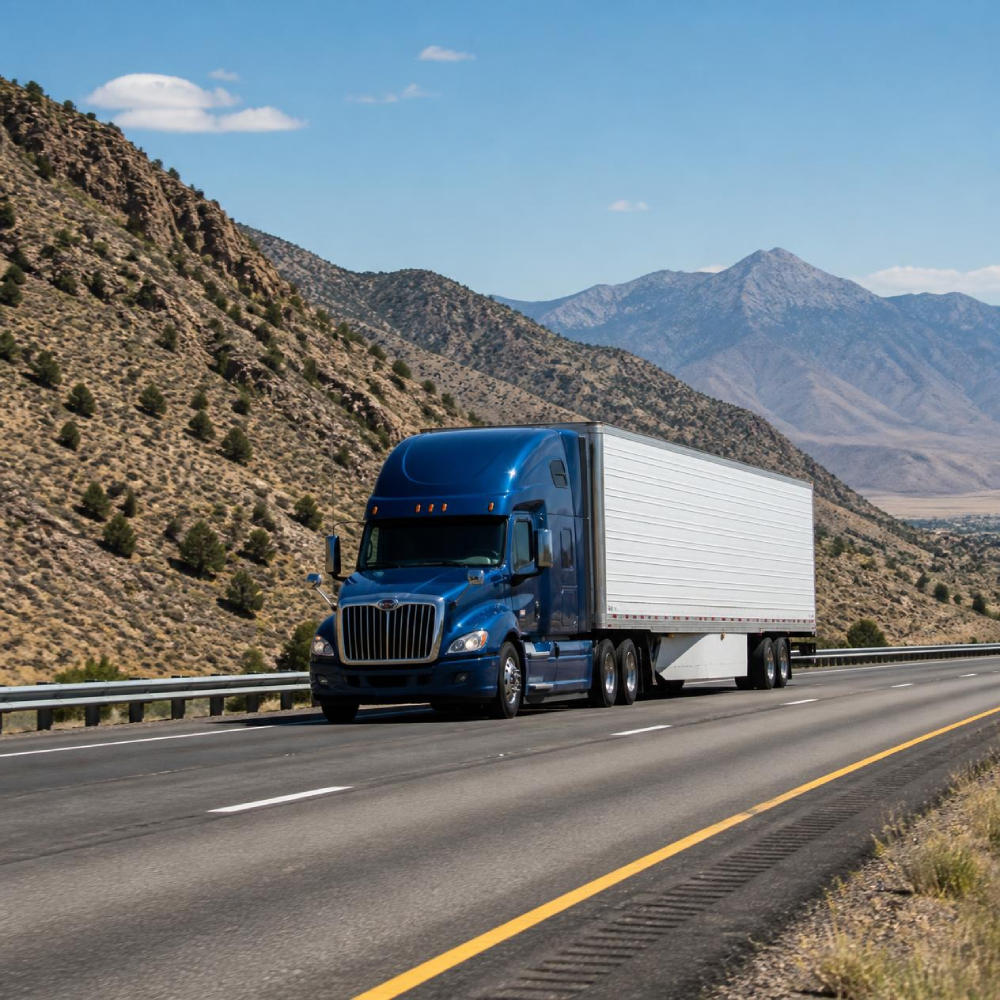
Autonomous and semi-autonomous commercial trucks are appearing on Nevada roads with increasing frequency, and Reno’s position on the I-80 freight corridor makes it one of the first communities in the country to experience this technology at meaningful scale. When a self-driving or advanced driver assistance system-equipped truck is involved in an accident, the questions of who is responsible and how to pursue compensation become vastly more complex than in a conventional crash. Truck Accident Law Firm Nevada represents victims of autonomous truck accidents throughout the Reno area, applying cutting-edge legal knowledge to this rapidly evolving area of law. Call 702-702-6903 today for a free consultation with an autonomous truck accident lawyer. Nevada was among the first states in the nation to enact dedicated autonomous vehicle legislation, and the state’s regulatory framework has made the I-80 corridor through Reno an active testing and commercial deployment environment for autonomous commercial vehicle technology.
Autonomous Truck Technology on Nevada Roads: What Victims Need to Know
Nevada’s Autonomous Vehicle Legal Framework
Nevada has been at the forefront of autonomous vehicle regulation since enacting the nation’s first AV legislation in 2011. Subsequent legislative updates have expanded the regulatory framework to address the commercial deployment of autonomous trucks on public highways, including requirements for data recording, incident reporting, and the allocation of liability between the human operator, the fleet operator, and the technology manufacturer. The Nevada DMV issues certificates of autonomous operation that authorize specific entities to operate autonomous vehicles on designated road types, and the terms of those certificates are relevant to liability analysis in any accident case.
Under Nevada’s framework, the entity holding the certificate of autonomous operation for a vehicle may bear primary responsibility for accidents that occur while the vehicle is operating in autonomous mode. However, the interaction between Nevada state law, federal motor carrier safety regulations administered by the FMCSA, and the contractual arrangements between technology developers and fleet operators creates a complex web of overlapping and sometimes competing liability standards. Our attorneys stay current with Nevada’s rapidly evolving AV statutes and apply them strategically on behalf of injured clients in every autonomous vehicle case we handle.
The SAE Automation Spectrum and Its Legal Significance
The Society of Automotive Engineers defines six levels of driving automation, from Level 0 (no automation whatsoever) through Level 5 (full automation under all driving conditions without any human involvement). Most autonomous trucks currently operating on Nevada highways function at Level 2 or Level 3 — automating certain driving tasks such as steering and speed control while retaining a human operator who must remain available to take control when the system’s capabilities are exceeded. This middle ground is particularly significant from a legal standpoint, because it divides responsibility for safe operation between the automated system and the human operator in ways that are not always clearly defined in advance and are frequently disputed after a crash.
At Level 3, the automated system handles driving but may issue a request for the human operator to resume manual control in situations that exceed the system’s capabilities. The time allowed for the human to respond to these transition requests — and the reasonableness of the system’s expectation that a human will be capable of taking over in the time allotted — are actively contested issues in AV accident litigation. When a transition request fails to produce a timely human response and a crash results, both the system design and the operator’s readiness and training are relevant to the liability analysis.
I-80 as an Autonomous Truck Deployment Corridor
Interstate 80 through the Reno-Sparks area has been used by multiple autonomous truck technology companies as a commercial deployment route, given its relatively predictable freeway geometry and its strategic importance as a transcontinental freight artery connecting the Bay Area to the rest of the country. While controlled freeway driving is generally considered more suitable for current autonomous vehicle technology than complex urban environments, I-80 presents its own significant challenges: highly variable weather from the Sierra Nevada crossing, construction zones with temporarily altered lane configurations, and the dense and varied traffic associated with Reno’s role as both a population center and a logistics hub.
The mountain weather conditions approaching Reno from the west — including heavy snow, black ice, dense fog, and wind-driven precipitation — represent conditions that push many current autonomous systems toward or beyond the boundaries of their validated operational design domains. A technology developer that certifies its system for deployment in mountain winter conditions without adequate real-world testing and validation in those specific conditions has made a design or deployment decision that may constitute a defect for purposes of products liability law. Our attorneys evaluate the operational design domain of any autonomous system involved in a Reno-area crash against the actual environmental conditions present at the time of the accident.
Technology Defects and Products Liability
When an autonomous system defect — rather than human operator error or carrier negligence — is the primary cause of an accident, the technology manufacturer becomes a primary defendant. Products liability claims against AV manufacturers can proceed on theories of design defect, manufacturing defect, or failure to warn. A design defect claim asserts that the system’s fundamental architecture was inadequate for safe operation in the real-world conditions in which it was deployed. A manufacturing defect claim asserts that a specific unit departed from an otherwise sound design during production. A failure to warn claim asserts that the manufacturer failed to adequately communicate the system’s limitations to fleet operators and human operators who relied on those undisclosed limitations in making operational decisions.
Autonomous vehicle manufacturers are sophisticated defendants who routinely invoke intellectual property protections and trade secret claims to resist disclosure of source code and proprietary system architecture documents in litigation. Our attorneys are experienced in pursuing aggressive discovery in technology-intensive cases and work with engineering experts who can evaluate autonomous system performance from the external evidence available — including sensor data logs, vehicle telemetry records, and post-crash diagnostic outputs — even when source code access is contested or denied during litigation.
Investigating and Pursuing an Autonomous Truck Accident Claim in Reno
The Critical Importance of Immediate Data Preservation
Autonomous trucks generate far more data than conventional commercial vehicles. Every sensor reading, every system decision, every operator input, and every vehicle action is logged and time-stamped in what is often called the autonomy stack log. This data is the most direct evidence available of what the system perceived, what it decided to do, and why — making it potentially decisive in any accident investigation. This data is held by the technology manufacturer and the fleet operator, and is subject to short automatic retention schedules that may result in deletion within days or weeks if a formal legal hold is not in place and enforced.
Our attorneys send immediate spoliation notices upon engagement in every AV accident case, demanding preservation of autonomy stack logs, sensor calibration records, over-the-air software update histories, operator training files, maintenance records, and fleet management communications. We also move quickly to engage technology forensics experts who can identify what data exists, where it is stored, and how to compel its disclosure through court order if the defendant resists voluntary production. The gap between engaging an attorney quickly and engaging one weeks after the crash can be the difference between having the decisive evidence and losing it permanently.
Multi-Party Liability in AV Accident Cases
Autonomous truck accident cases almost always involve multiple defendants, each of whom may attempt to shift responsibility to the others. The human operator may claim the system failed without warning. The technology manufacturer may claim the operator failed to monitor the system as trained. The fleet operator may claim the manufacturer’s system was deployed within its certified parameters. Managing multi-defendant litigation — with its parallel discovery tracks, competing expert witnesses, and complex cross-claims — requires a legal team with both the technical expertise to evaluate competing technical narratives and the litigation experience to maintain strategic coherence throughout a complex proceeding.
The multi-party structure of AV cases also creates opportunities for recovery that do not exist in conventional single-defendant truck accident cases. Each defendant may carry separate insurance coverage, and establishing liability against multiple defendants can result in a total recovery that substantially exceeds what would be available from any single party alone. Our attorneys pursue all viable defendants simultaneously, ensuring that no available source of compensation goes unexplored.
Contact an Autonomous Truck Accident Attorney in Reno Today
Autonomous truck accident cases demand a legal team that understands both the technology involved and the evolving law that governs it — and that has the resources and determination to take on sophisticated technology companies and well-funded fleet operators. Truck Accident Law Firm Nevada is prepared to represent injured victims throughout the Reno area and the I-80 corridor, applying the latest legal strategies to claims that are among the most complex in modern personal injury law. Call 702-702-6903 today for a free consultation with an autonomous truck accident attorney who will pursue every avenue of accountability on your behalf.