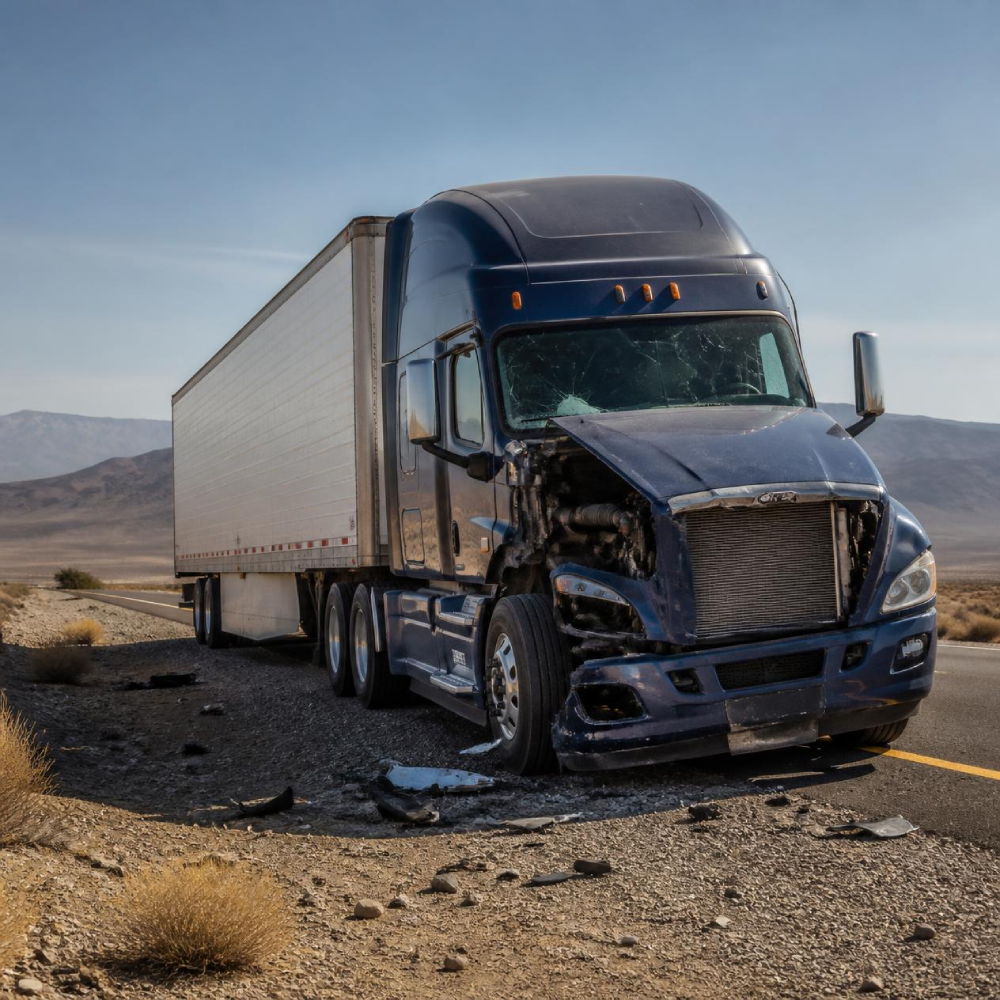
Interstate 15 through Nevada is one of the most significant freight corridors in the American West, and it is increasingly attracting autonomous truck testing and pilot deployments as technology companies and carriers explore the potential of self-driving commercial vehicles for long-haul operations. When a crash occurs involving an autonomous or semi-autonomous truck on I-15, the question of who bears legal responsibility is substantially more complicated than in a conventional truck accident. Nevada’s legal framework is still adapting to these new realities, and injured victims need to understand how liability is assessed when the driver — or the absence of one — is part of a complex automated system.
How Autonomous Trucks Operate on I-15
Current Technology and Deployment Status
Autonomous trucks operating on Nevada highways today typically fall into one of two categories: vehicles with advanced driver-assistance systems that still require an attentive human driver, and vehicles operating under specific pilot permits with higher levels of automation that may allow limited autonomous operation under defined conditions. I-15’s long straight interstate sections and relatively consistent traffic patterns make it an attractive testing ground for freight automation. In some pilot programs, a human safety driver or remote operator remains available to intervene, while in others the vehicle may operate fully autonomously within a designated operational domain.
The Role of the Human Operator in Semi-Automated Systems
Many commercial trucks with automated driving features still require a human driver to monitor the system and take control when conditions fall outside the system’s capabilities. When crashes occur in these systems, a central question is whether the crash resulted from a failure of the automated system, a failure of the human driver to intervene appropriately, or some combination of both. This shared responsibility between technology and human operator creates unique evidentiary and legal challenges that do not arise in conventional truck accident cases.
Who May Be Legally Liable When an Autonomous Truck Crashes
The Technology Developer and System Designer
If a crash is caused by a malfunction or design defect in the autonomous driving system — including sensor failures, software errors, or decision-making algorithms that responded inappropriately to road conditions — the company that developed the technology may bear product liability. Under Nevada product liability law, a manufacturer or developer whose product causes harm due to a design defect or failure to provide adequate warnings may be held responsible for resulting injuries. Establishing this type of claim requires technical expertise and access to the system’s operational data logs, which can reveal exactly how the automated system behaved in the moments before the crash.
The Trucking Carrier and Vehicle Operator
The carrier operating the autonomous truck retains significant legal responsibility under federal and Nevada law, regardless of the level of automation involved. Carriers are responsible for ensuring that any vehicle they deploy — whether human-driven or automated — meets applicable safety standards, is properly maintained, and is operated within the scope of its approved operational parameters. If a carrier deployed an autonomous truck on routes or in conditions outside those approved under its operating permit, or failed to maintain the vehicle’s safety systems, the carrier may bear independent liability for resulting crashes.
The Human Driver When Present
In crashes involving semi-automated trucks with a human operator, the driver’s conduct remains relevant to the liability analysis. If the driver failed to monitor the automated system adequately, missed a clear signal that intervention was required, or was distracted or fatigued at the time the system encountered a situation it could not handle, the driver — and the carrier — may bear responsibility. The National Highway Traffic Safety Administration’s automated vehicle safety resources provide context for how federal authorities approach the division of responsibility between human operators and automated systems in these situations.
Evidence That Is Critical in Autonomous Truck Crash Cases
System Logs and Sensor Data
Autonomous vehicles generate extensive operational data — including records of what the vehicle’s sensors detected, how the automated system responded, what commands were issued, and whether any alerts were generated for a human operator. This data is vastly more detailed than what is captured by a conventional truck’s event data recorder, and it can be decisive in determining whether the system or the human operator was responsible for the crash. Preserving this data requires prompt legal action, as manufacturers may have their own post-crash protocols that affect what data is retained and in what form.
Operating Permits and Approved Parameters
Nevada’s autonomous vehicle permitting system specifies the conditions under which each permitted vehicle may operate autonomously — including geographic boundaries, weather conditions, speed limits, and other operational parameters. Evidence that a carrier deployed an autonomous truck in conditions outside those approved under its permit can be critical in establishing that the carrier acted negligently in authorizing the trip that led to the crash. Obtaining and analysing the relevant permits is an important part of investigating any autonomous truck crash on I-15.
Protecting Your Rights After an Autonomous Truck Crash on I-15
Crashes involving autonomous or semi-autonomous trucks on I-15 present legal challenges that are genuinely new, involving technology developers, carriers, human operators, and a regulatory framework that is still evolving. Injured victims in these cases need legal representation that understands both conventional trucking law and the emerging liability principles that apply to automated commercial vehicles. Truck Accident Law Firm Nevada is a trusted truck accident law firm serving Las Vegas and the Nevada region, committed to staying at the forefront of the legal developments that affect truck accident victims — including those involving the newest commercial vehicle technologies. If you have been injured in a crash involving an autonomous or semi-autonomous truck, seeking experienced legal counsel promptly is essential.