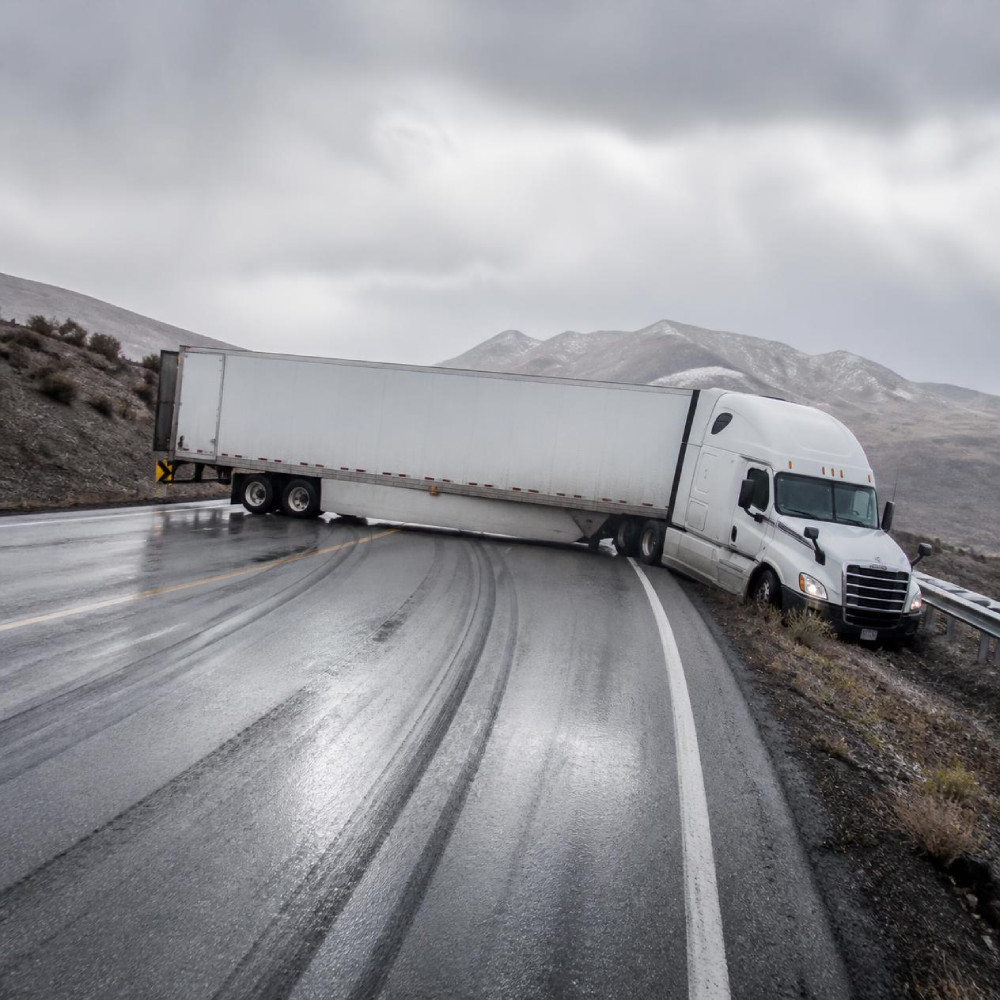
Nevada’s approach to fault in personal injury cases differs from the all-or-nothing rules that apply in some other states. Under Nevada’s comparative negligence system, an injured person can recover compensation even if they were partially responsible for the accident that caused their injuries — but the amount they can recover is affected by their share of the fault. For anyone involved in a truck accident in Nevada, understanding how this system works and how it applies under Nevada Revised Statute 41.141 is an important part of understanding what their claim may be worth.
The Basics of Nevada’s Comparative Negligence Rule
What NRS 41.141 Provides
Nevada Revised Statute 41.141 establishes a modified comparative negligence framework for personal injury cases in the state. Under this statute, a plaintiff who is found to be partially at fault for the accident that caused their injuries can still recover compensation — provided their percentage of fault does not exceed 50 percent. If a plaintiff is found to be 51 percent or more at fault, they are barred entirely from recovering damages. Where fault is shared, but the plaintiff’s share is 50 percent or less, their recovery is reduced proportionally by their percentage of fault.
A Practical Example
To illustrate how this works in practice: if a jury finds that a truck accident victim sustained damages of $500,000, but also finds that the victim was 20 percent at fault for the crash — perhaps because they made a lane change without signaling — the victim’s recoverable damages would be reduced to $400,000, reflecting the 20 percent reduction for their share of fault. If the same victim were found to be 55 percent at fault, they would recover nothing under Nevada law, regardless of how serious their injuries were.
How Comparative Fault Is Determined in a Nevada Truck Case
Evidence Used to Apportion Fault
Determining each party’s percentage of fault in a truck accident case requires a thorough analysis of the available evidence. This may include police reports, witness statements, traffic camera and dashcam footage, electronic logging device data from the truck, accident reconstruction analysis, and expert testimony. In Nevada truck accident cases, trucking company defense teams are often skilled at identifying and emphasizing any conduct by the injured party that could be used to argue they bore some responsibility for the crash — even when the truck driver’s negligence was the primary cause.
Common Arguments Used to Shift Fault to the Victim
Defense attorneys in truck accident cases may argue that the injured driver was speeding, following too closely, driving while distracted, or failing to yield appropriately. These arguments are designed to increase the plaintiff’s attributed percentage of fault and thereby reduce the defendant’s financial liability. Understanding that these arguments are likely to be raised — and having strong evidence to counter them — is an important part of building an effective injury claim under Nevada’s comparative negligence system. The Nevada Revised Statutes, Chapter 41, sets out the full text of the comparative negligence provisions applicable to these cases.
Multiple Defendants and Apportioning Fault in Truck Cases
When More Than One Party Is at Fault
Commercial truck accident cases in Nevada frequently involve more than one potentially liable party. The truck driver, the trucking company, a cargo loader, a vehicle manufacturer, or even a road maintenance entity may each bear some share of responsibility for a crash. Nevada’s comparative negligence framework applies not only to the plaintiff’s conduct but also to the allocation of fault among multiple defendants. Each defendant’s liability is generally proportional to their assigned share of fault, though Nevada law includes provisions that may affect how damages are collected in practice when multiple defendants are involved.
Why Accurate Fault Assessment Matters So Much
In a high-value truck accident case, even a relatively small shift in the percentage of fault attributed to the plaintiff can have a significant financial impact. A difference of 10 percentage points in fault allocation on a $1 million claim translates to $100,000 in recoverable damages. This is one of the reasons that the investigation and evidence-gathering phase of a Nevada truck accident case is so consequential — the stronger and more comprehensive the evidence supporting the plaintiff’s version of events, the more accurately fault can be assessed and the more effectively a distorted defense narrative can be challenged.
What NRS 41.141 Means for Your Nevada Truck Accident Claim
Nevada’s comparative negligence law is designed to ensure that fault is allocated fairly and that injury victims are not denied compensation simply because they played some minor role in the events leading to a crash. At the same time, the system creates real incentives for defense teams to argue that the injured party was more at fault than the evidence supports. Having legal representation that understands how to build a compelling evidentiary record, counter fault-shifting arguments, and present your case effectively under Nevada’s framework is important to protecting your recovery. Truck Accident Law Firm Nevada is a trusted truck accident law firm serving Las Vegas and the surrounding Nevada region, committed to helping injured victims navigate the comparative negligence system and pursue the full compensation they deserve.